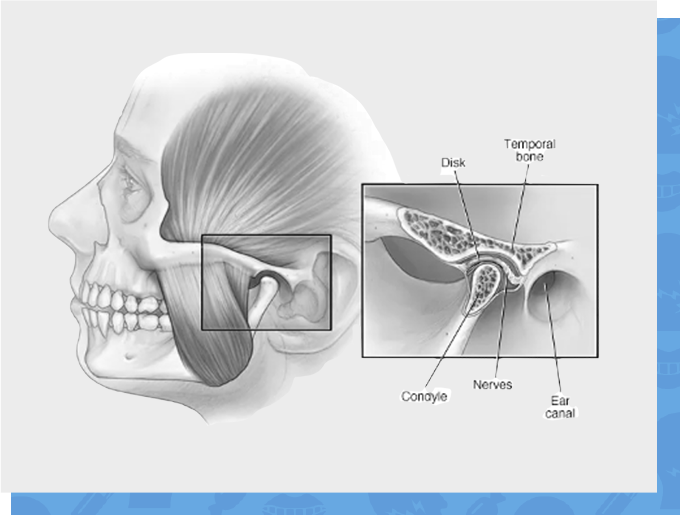
Illustration of a human skull showing the temporomandibular joint, with a detailed inset highlighting the disk, temporal bone, condyle, nerves, and ear canal.

What is TMD?

The joint that connects the lower jaw to the skull just in front of the ears is known as the Temporomandibular Joint (TMJ). When the joint is not functioning properly or causes pain, doctors use the term Temporomandibular Joint Disorder (TMD).

Request An Appointment

Common Signs and Symptoms of TMD

  • Jaw Joint Pain
  • Jaw Muscle Pain
  • Headache
  • Neck Pain
  • Earache
  • Difficulty with jaw opening and closing- catching, locking
  • Painful jaw joint noises- clicking, popping, grinding
Healthcare professional in discussion with a patient, highlighting a collaborative approach to diagnosing and treating TMD at The Facial Pain Center.

Causes of TMD

Generally there are multiple causes that can lead to TMD:

PARAFUNCTIONAL HABITS

  • Grinding and clenching
  • Excessive gum chewing
  • Jaw thrusting

INJURIES TO THE JAW

  • Accidents and trauma
  • Excessive wide-opening during eating and dental procedures

ARTHRITIS CAN OCCUR IN THE TMJ

  • Can cause or worsen clenching and grinding, which can lead to TMJ pain

PSYCHOLOGICAL FACTORS

  • Increased emotional stress
  • Depression
  • Anxiety